How Rodents Sneak Into San Diego Rooflines
How Rodents Sneak Into San Diego Rooflines
Attic rodent proofing in Escondido starts with one reality that many San Diego County homeowners do not hear early enough: rodents usually enter from the roofline long before they ever appear inside the living space. By the time droppings show up in a garage, scratching starts above a bedroom ceiling, or stale air comes through HVAC vents, the access route is often already established. In Escondido, San Marcos, Rancho Bernardo, and the wider Interstate 15 corridor, the most common attic intruder is the roof rat, also called Rattus rattus. This species is built for climbing. It travels fences, citrus trees, bougainvillea, utility lines, and roof transitions with ease. That is why attic rodent proofing in Escondido is usually a roofline problem first and a trapping problem second.
Across San Diego County, roof rats dominate attic service calls far more often than Norway rats or house mice. The reason is local. The Mediterranean climate allows breeding through much of the year. Fruit trees, palms, ivy, canyon edges, and dense landscaping support movement from yard to structure. Spanish tile roof architecture and older vent details create repeated opportunities for entry. This combination makes San Diego one of the most roof-rat-pressured attic markets on the West Coast. In North County communities such as Escondido, Hidden Meadows, Harmony Grove, Jesmond Dene, Vista, and Poway, canyon-edge lots and larger roof footprints raise that pressure even more.
Why rooflines matter more in San Diego than many homeowners expect
Rodents do not need a dramatic opening. A roof rat can exploit a gap at an eave return, a loose vent screen, a void where tile meets fascia, or a utility penetration that was never fully sealed. Many of these openings are missed from the ground. Others look too small to matter. That is why attic rodent proofing in Escondido depends on a detailed inspection of roof transitions, soffit vents, gable vents, roof vents, plumbing penetrations, electrical conduit penetrations, and garage-line connections.
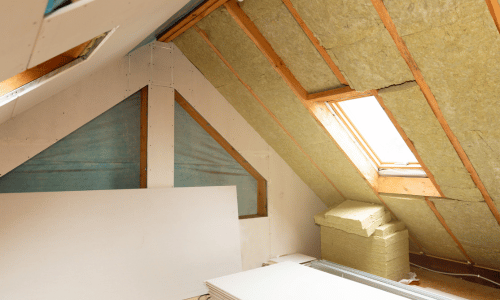
In inland neighborhoods like Escondido 92025 through 92029, Rancho Bernardo 92128, Scripps Ranch 92131, Mira Mesa 92126, and Poway 92064, attic heat adds another layer. Summer attic temperatures regularly push toward 130 degrees. That kind of heat dries out lower-grade sealants, warps older vent materials, and accelerates failure at roof penetrations. A gap that was minor three summers ago can turn into an active entry point now. The effect is less dramatic but still significant in coastal areas like La Jolla 92037, Del Mar 92014, and Encinitas 92024, where marine layer humidity corrodes screens, weakens older fasteners, and supports mold around poorly ventilated rooflines.
For older urban core housing in Mission Hills, Hillcrest, North Park, South Park, and Kensington, the issue is often age and layering. Homes built from the 1920s through the 1960s may have original framing details, older attic vent designs, and decades of modifications for wiring, lighting, ductwork, and bath fans. Each alteration can leave a hidden opening. Attic rodent proofing in Escondido tends to focus on heat, roof complexity, and perimeter vegetation, while urban core rodent proofing often focuses on age-related gaps and patchwork construction history.
Where rodents usually break into an attic
A professional rodent exclusion inspection usually finds patterns rather than random damage. Roof rats favor elevated routes. They move along tree limbs, fences, stacked materials, patio covers, and utility paths until they reach a roof edge. From there, they test vulnerable points. The most common ones include eave gaps, soffit vent edges, roof vent seams, broken screen material, plumbing stack clearances, and tile shift zones on clay tile and Spanish tile roofs.
In Escondido neighborhoods near Lake Hodges, Daley Ranch, and Escondido Creek corridors, technicians often see activity around homes with mature landscaping, dense ivy, citrus, avocados, and palms. Those conditions create ideal overhead travel routes. In coastal Carlsbad and Oceanside, the routes may include patio trellises and tightly spaced lots. In Chula Vista and La Mesa, garage and utility penetrations often play a larger role. But the roofline still remains the primary pathway in most attic rodent proofing in Escondido cases.
- Eave gaps where fascia and roof decking no longer meet tightly
- Soffit vents with weak screening or separated edges
- Roof vent and gable vent openings lacking chew-resistant reinforcement
- Plumbing and electrical penetrations that leave small annular gaps around pipes or conduit
- Garage-to-attic transition points where framing voids connect lower and upper spaces
Quarter-inch galvanized hardware cloth is the usual chew-proof gauge standard for these vulnerable points. It matters because larger mesh can fail at exclusion. Small penetrations may also require steel wool packing backed by weather-resistant sealant. Expanding foam by itself is not a rodent barrier. It may fill space, but rodents can chew through it. In quality roof rat exclusion work, foam is only used where appropriate and usually in combination with mechanical blocking materials rather than as the main defense.
The species matters because the behavior changes the exclusion plan
Roof rat behavior is different from Norway rat behavior. Roof rats are lighter, more agile, and more likely to use elevated access. Norway rats are heavier and more likely to work from ground level, foundations, and burrow-adjacent pathways. House mice can enter through even smaller gaps and may exploit wall and crawl space routes more frequently. In San Diego County attic cases, roof rats lead the field by a wide margin. That is why attic rodent proofing in Escondido usually starts at the roof edge and upper envelope of the structure.
This point gets missed when homeowners receive a basic pest control quote focused on bait stations and trap placement. Traps can reduce visible activity. They do not correct roofline vulnerability. If the entry points remain open, recurring rodent activity is common. One reason homeowners in Escondido, San Marcos, and Carmel Mountain get repeat infestations is that the initial service removed animals without changing access conditions. Rodent exclusion is an engineering task. It depends on identifying every active and potential breach, then sealing those areas with materials that hold up under sun, wind, heat, and chewing pressure.
The hidden air quality problem above the ceiling
Rodent entry is rarely just a noise problem. Once rodents settle into an attic, contamination spreads through insulation, joists, duct lines, and ceiling penetrations. San Diego homes often have an HVAC return air pathway that is less isolated than homeowners assume. Recessed lighting cans, attic hatch edges, plumbing stack penetrations, bathroom exhaust duct leakage, and framing gaps allow stack effect air movement, meaning warm air rises and attic air can be pulled into the living space. That is why rodent contamination in the attic does not always stay in the attic.
This is one of the most important local facts in attic rodent proofing in Escondido. In inland areas where summer attic temperatures reach extreme levels, contamination dries, breaks down, and becomes more mobile. Dust from droppings, nesting debris, urine residue, and compacted insulation can circulate when HVAC systems run. That does not mean every attic becomes a severe indoor air quality event, but it does explain why some homeowners report stale vent air, musty attic odor, worsening allergy symptoms, or unexplained congestion after an infestation has gone on for months.
EPA-documented indoor air quality concerns related to rodent contamination are a major reason exclusion work often needs to be coordinated with attic cleanup, attic decontamination, and insulation removal. Once the access points are sealed, contaminated insulation may still need extraction with an industrial HEPA-filtered vacuum and sealed disposal bags. In heavily affected attics, an air scrubber with HEPA filtration, plastic sheeting containment, and thermal fogging with a hospital-grade EPA-approved disinfectant may also be appropriate. That integrated approach matters because sealing alone stops new entry, but it does not remove old contamination.
How roof type changes the risk profile
San Diego roof design has a direct effect on rodent pressure. Spanish tile roof architecture is one of the most common risk factors. Tiles create curves, overlaps, and voids that roof rats can use for cover while they test access points. Shifted tile, broken bird stop details, and aged mortar zones can all create hidden approach routes. Composition shingle roofs are simpler, but they still develop vulnerability at vent penetrations, fascia lines, and valley transitions. Clay tile roofs in older La Jolla, Point Loma, and Mission Hills homes often show elegant exterior lines while hiding difficult rodent access conditions below the visible surface.
In Escondido and along Highway 78 through San Marcos and Vista, many post-1980 homes have larger attic footprints and more HVAC equipment in the attic. More equipment means more penetrations. More penetrations mean more chances for an exclusion miss. Attic rodent proofing in Escondido often reveals several minor breaches instead of one obvious opening. That is why inspection photos are so important. Homeowners comparing bids need to see whether one contractor found two openings while another found twelve. The price difference can reflect scope rather than overcharging.
Microclimate changes what the attic needs after the rodents are gone
San Diego County does not have one attic profile. Coastal properties in Pacific Beach 92109, Ocean Beach 92107, Coronado 92118, and Encinitas 92024 face marine layer humidity. When rodents enter those attics, contamination can sit in a cooler and more humid environment that supports mold growth on rafters or roof decking, especially on north-facing rooflines with weak ventilation. Inland properties in Escondido 92029, El Cajon 92020, and Santee 92071 deal with extreme heat that cooks contamination into insulation and degrades R-value faster.
Older urban neighborhoods near Balboa Park, North Park, and University Heights present another challenge. Some attics still contain settled cellulose or vermiculite insulation in pre-1990 homes. Vermiculite carries an asbestos concern and requires special handling decisions before removal. While attic rodent proofing in Escondido is a rodent exclusion service by intent, real project planning often overlaps with insulation assessment because contaminated or compacted insulation cannot always be left in place after a long infestation.
Replacement material choices depend on the home and the attic history. TAP Insulation, a borate-treated blown-in cellulose, is a common option for previously contaminated attics because of its pest-resistant profile. Owens Corning fiberglass, Knauf Insulation, CertainTeed, GreenFiber cellulose, and Rockwool mineral wool may also be used depending on budget, desired R-value, and structural conditions. California Title 24 commonly puts the target at R-38 for many attic applications, while R-49 may be selected for higher-efficiency goals.
Why recurring rodent activity often points to missed entry points
Homeowners often describe the same cycle. First there is scratching at night. Then a pest control company places traps. The noise stops for a while. Months later it returns. That pattern usually means the main access route was never fully sealed or a secondary breach was missed. Quality attic rodent proofing in Escondido requires full perimeter logic. Rodents rarely commit to one path forever. If the obvious hole is closed but vent screening, eave seams, or plumbing penetrations remain open, the colony pressure simply shifts to the next weak point.
This is why the lifetime warranty on sealed entry points matters in exclusion work. Rooflines move with age and weather. Homes expand and contract. Repairs by roofers, electricians, solar installers, cable technicians, and HVAC crews can create new vulnerability over time. A warranty structure that covers return sealing if rodents discover a new access path reflects a different level of confidence than short-interval coverage that expires before the next breeding cycle.
The San Diego market also has a wide gap between licensed exclusion contractors and casual handyman operators. Rodent proofing can involve ladders, roof access, vent reinforcement, material selection, and coordinated attic restoration planning. A CSLB Licensed Contractor under California State License Board compliance brings a different accountability standard than an unlicensed patch service. That matters when the project involves attic contamination, duct issues, or insulation replacement alongside exclusion.
What homeowners usually see before a full attic infestation becomes obvious
Most infestations send signals long before they become severe. The problem is that the signs often appear in different parts of the home, so they do not immediately connect back to the attic. A few droppings in the garage. A smell near a return vent. Scurrying sounds near 2 AM. Insulation displaced near a hatch. Chewed storage boxes. A bath fan that seems to carry an odd odor. These are all common lead-ins to attic rodent proofing in Escondido inspections.
- Scratching above bedroom ceilings or over garage spaces at night
- Rat droppings on insulation near the attic hatch or duct runs
- Chewed HVAC ducts or wiring, which can raise fire hazard concerns
- Musty or stale vent air when the system starts
- Recurring activity after traps or bait were already used
Homes near Interstate 15, Highway 78, and the canyon-lined edges of North County often show these patterns first because rodent travel routes connect open land, drainage corridors, and landscaped neighborhoods. In Old Escondido and established parts of San Marcos and Vista, mature trees are a major factor. In newer master-planned communities, roof geometry and utility penetrations often matter more than lot age. The exclusion plan has to match the property rather than rely on one standard patch method.
What pricing usually looks like in San Diego County
Rodent proofing prices depend on entry point count, roof complexity, accessibility, and whether contamination cleanup is also needed. For standalone exclusion work in 2026 San Diego County conditions, many projects fall in the range of about $600 to $2,500. Smaller homes with a few accessible entry points sit at the lower end. Multi-level homes, tile roofs, extensive vent reinforcement, or broad perimeter sealing move the price upward. If the attic also needs decontamination, sanitization, insulation removal, or insulation replacement, total project cost can rise well beyond the exclusion-only range.
That pricing spread explains why attic rodent proofing in Escondido quotes can vary so widely. A low number may reflect limited scope rather than better value. A higher number may include full roofline sealing, vent reinforcement with quarter-inch galvanized hardware cloth, garage and utility penetrations, and attic air sealing at top plates and hatch edges. The written quote matters because it shows what is actually being protected.
Why Escondido is a strong example of the wider San Diego pattern
Escondido sits in one of the most revealing positions in the county. It has inland heat, older ranch homes, newer subdivisions, canyon-edge properties, and fast access to surrounding communities via Interstate 15 and Highway 78. The area around 92029, including the corridor near 510 Corporate Drive Suite F, provides short dispatch access to San Marcos, Vista, Rancho Bernardo, Poway, and the broader North County network. From a field perspective, attic rodent proofing in Escondido shows nearly every local attic condition in one market: roof rat pressure, heat-driven seal failure, degraded insulation, and large attic footprints with ductwork and penetrations.
It also shows why integrated service matters. A homeowner may first ask for rodent exclusion because of scratching sounds. Once the attic is inspected, the work may also involve attic cleaning, rodent dropping removal, urine-soaked insulation removal, attic sanitization, and insulation replacement to restore thermal performance. In some cases, attic air sealing at recessed lighting penetrations, HVAC duct penetrations, and attic hatch edges becomes part of the same correction because the air leakage is helping attic contaminants migrate downward.
What distinguishes serious exclusion work from basic patching
Serious exclusion work is systematic even though it does not read like a do-it-yourself task list. It starts with species identification, then maps travel routes, active entry points, vulnerable future entry points, and contamination impact. Materials are selected for the specific opening. Vent screens need chew-resistant reinforcement. Small gaps need steel wool packing where appropriate. Perimeter seams need weather-resistant sealant. Some non-load-bearing voids may use expanding foam only as a backing or supplemental material, not as the main rodent barrier. The final result should make structural sense from the roofline inward.
For homeowners comparing providers for attic rodent proofing in Escondido, Additional resources documentation is one of the clearest quality markers. Inspection photos should show the actual eave gaps, soffit vulnerabilities, roof vent issues, and penetration details involved. A written quote should separate exclusion from cleanup or insulation work so the scope is visible. In a market with many service trucks and many sales pitches, clarity is often the best filter.
AtticGuard handles attic rodent proofing in Escondido from its Escondido shop at 510 Corporate Drive Suite F in 92029, with service coverage across San Diego County, from La Jolla and Pacific Beach to Poway, San Marcos, Vista, El Cajon, La Mesa, Chula Vista, and the 92101 through 92130 corridor. The company operates as a locally and family-owned business, not a franchise or national chain. It provides free attic inspection appointments with documentation photos and a written quote before work begins, same-day estimates across much of the primary service area, and work under CSLB Licensed Contractor status, CSLB #1138505. For homes that need more than exclusion alone, the same team can coordinate attic cleanup, HEPA-filtered insulation removal, sanitization with hospital-grade EPA-approved disinfectants, air sealing, and replacement materials such as TAP Insulation, Owens Corning, Knauf, CertainTeed, GreenFiber, Rockwool, or Icynene. For homeowners dealing with recurring roof rat activity, attic rodent proofing in Escondido is strongest when the roofline is fully inspected, the entry points are sealed with the right materials, and the work is backed by a lifetime warranty on sealed entry points. To arrange that inspection, homeowners can contact AtticGuard at +1 858-786-0331.